Hezbollah: The Rise and Origins of the Party of God, Power Of Middle East
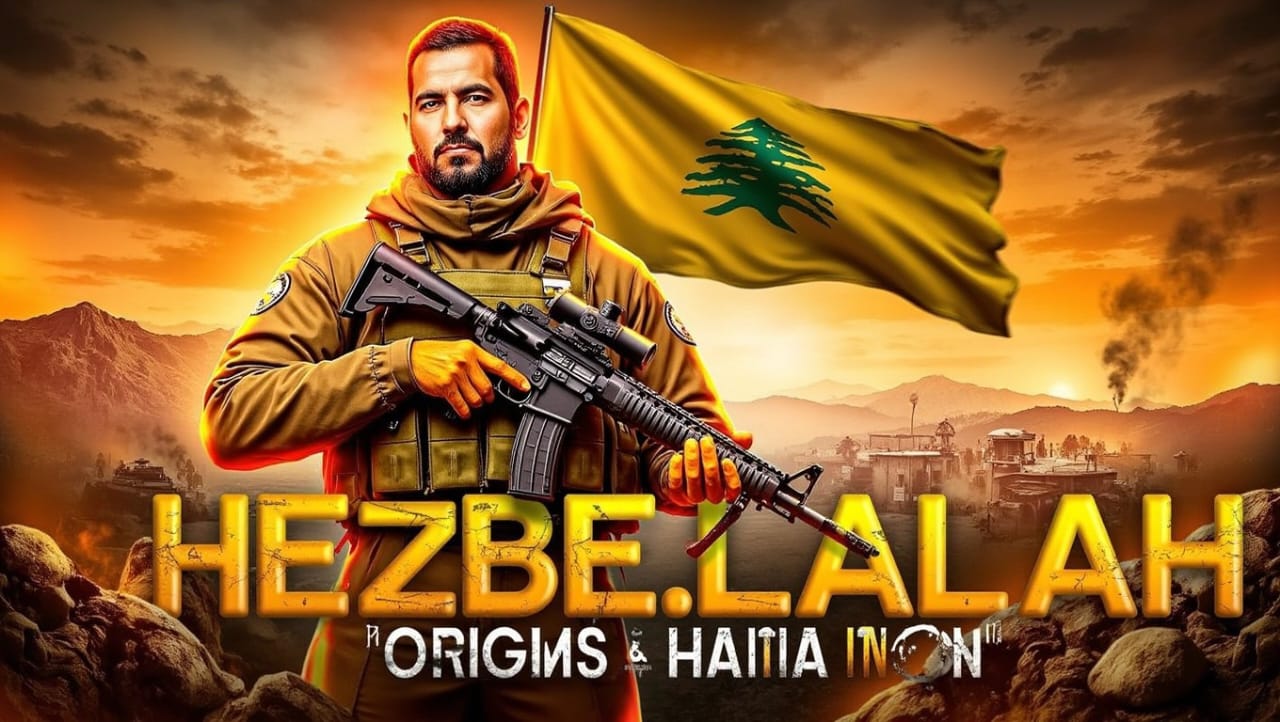
Hezbollah, meaning “Party of God” in Arabic, is a Shiite Muslim organization based in Lebanon. Founded in the early 1980s, it has grown from a small resistance group into one of the most powerful military and political forces in the Middle East. Hezbollah plays a complex role — part resistance movement, part political party, and part social welfare organization.
Civil War and Occupation
The roots of Hezbollah trace back to Lebanon’s civil war (1975–1990) — a period of extreme instability. The war divided the country along religious and political lines.
In 1982, Israel launched a full-scale invasion of Lebanon to expel the Palestinian Liberation Organization (PLO). This invasion led to massive destruction and triggered anger among Lebanon’s Shiite population, especially in the south, where Israeli forces remained stationed.
At the same time, the Iranian Islamic Revolution (1979) inspired many Lebanese Shiites. Iran’s Islamic Revolutionary Guard Corps (IRGC) sent advisors and trainers to Lebanon’s Bekaa Valley to organize Shiite resistance forces. These efforts eventually gave birth to Hezbollah.
The Formation of Hezbollah (1982–1985)
Hezbollah officially emerged between 1982 and 1985, supported by Iran and shaped by the ideology of Ayatollah Khomeini.
In 1985, the group published its first manifesto, outlining its ideology and goals:
- To resist and expel Israeli forces from Lebanon.
- To defend Lebanon’s Shiite community and their rights.
- To spread the principles of Islamic revolution inspired by Iran.
- To oppose Western influence, particularly that of the United States and Israel.

2006: Hezbollah engaged in a 34-day war with Israel, displaying unexpected military strength. Though Lebanon suffered heavy damage, Hezbollah’s ability to hold its ground boosted its image as a symbol of resistance across the Arab world.
Military Growth and Major Conflicts
Hezbollah’s military wing quickly became one of the most disciplined non-state forces in the world.
2000: After nearly two decades of fighting, Hezbollah forced Israel to withdraw from southern Lebanon, marking a significant victory for the group and earning it widespread popularity.
Iran and Syria’s Strategic Support
Hezbollah’s rise wouldn’t have been possible without the support of Iran and Syria.
Iran provides financial aid, weapons, and military training.
Syria offers logistical routes and political backing.
This support network allows Hezbollah to project power beyond Lebanon, influencing conflicts in Syria, Iraq, and Yemen, and positioning itself as a key player in Iran’s regional strategy.
For all my Brazilian buddies out there, xpgamesbr is on my radar. Heard good things and ready to dive in. Time to check out xpgamesbr.